Dennis Kennedy is the Samuel Beckett Professor of Drama (Emeritus) in Trinity College Dublin. He has published a number of award-winning books on literary and theatrical subjects, fiction, and a study of the gospel of Mark. He has also worked internationally as a playwright and director.
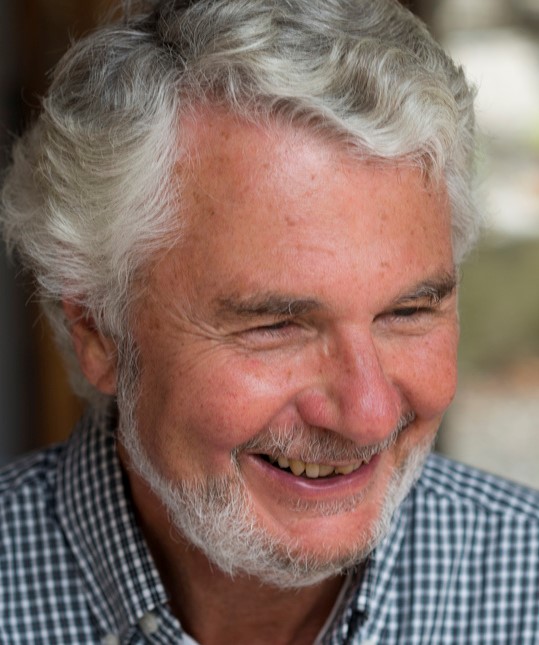
Photo: Ted Jones
He was born in Cincinnati in 1940. At age 12 his family moved to Santa Barbara where he attended high school, then studied literature, philosophy, and history at the University of San Francisco (BA 1962).
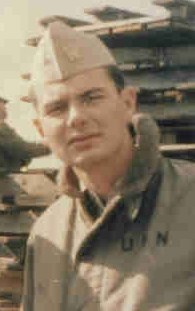
He was admitted to the US Naval Officer Candidate School in Newport, Rhode Island, before being assigned as communications officer on the USS Graffias in Japan and the Pacific during the early stages of the American War in Vietnam. His next post was shore duty in Pearl Harbor; he acted professionally in Honolulu during that time.
He did graduate work at Oxford and the University of California, Santa Barbara (MA 1968, PhD 1972). For a decade he taught literature and theatre at Grand Valley State in western Michigan. Under the initiative of Michael Birtwistle he helped to establish an alternative theatre in Grand Rapids, called Stage 3, where he acted, directed, wrote, and founded the Michigan New Plays Festival. In 1973 he was Senior Fulbright Lecturer at the University of Karachi in Pakistan and in 1976– 1977 playwright-in-residence at the University of Oregon. He spent two separate years researching in London and Oxford on Fellowships from the US National Endowment for the Humanities.
He 1983 he moved to the University of Pittsburgh, where he was director of graduate studies in theatre and taught in the Cultural Studies program. By then his own plays had been performed in art theatres in New York, London, and in regional theatres in the US. He also began to advise theatres in London, Canada, and the US on the performance of the plays of Harley Granville Barker and G. B. Shaw, and lectured worldwide on Shakespeare, theatre, and the relationship of art to politics.
Kennedy’s scholarly books on theatre and performance, published by Oxford and Cambridge university presses, brought a different type of recognition. His work on Shakespeare began a process of changing what had been an insular approach centered on the text in English to a broader understanding of the importance of Shakespeare internationally, outside the English language. Looking at Shakespeare, which reviewed design and the visual in twentieth-century production, argued that the meaning of performance is as dependent on what is seen as on what is spoken. This was followed by Foreign Shakespeare, a volume that was a turning point in Shakespeare studies, emphasizing the significance of performance in Europe and Asia. By the time Shakespeare in Asia was released some fifteen years later, a shift from the Anglo-centred approach to England’s national poet had been broadly noted in scholarship and performance.
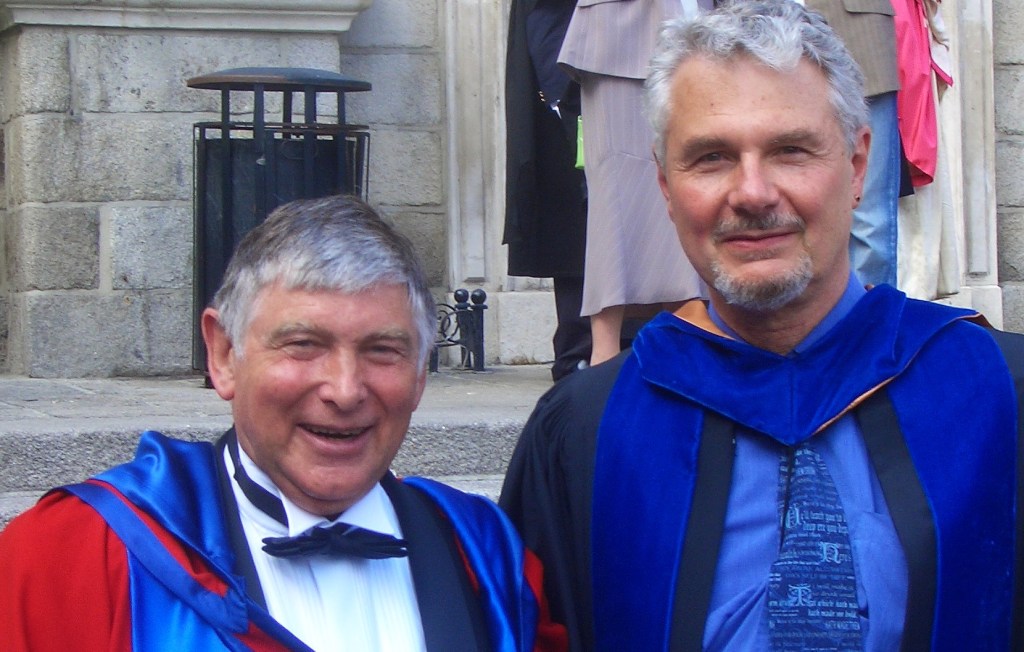
In 1994 he was appointed the inaugural holder of the Samuel Beckett Chair of Drama and Theatre in Trinity College Dublin, where he remained until retirement. He founded the film studies program there, and in collaboration with the Abbey Theatre (the National Theatre of Ireland) and the Irish Film Centre, he established training programs for actors and filmmakers. His edition of The Oxford Encyclopedia of Theatre and Performance, and its subsequent redactions in the Oxford Companion series, received wide praise and have become the standard reference works in the field. His book on audiences, entitled The Spectator and the Spectacle, consolidated his wide thinking about the nature of public reception in performance , and included studies of audiences for sport, TV game shows, museums, gambling, and religious ritual.
He began publishing short stories in 2013 and his novel Fossil Light was published a decade later. His most recent book, Creating Jesus, a study of the gospel of Mark as literary and historical document, consolidated a life-long interest in the history of Christianity and its place in contemporary culture.
He twice won the Freedley Award for theatre history, won the Chancellor’s Distinguished Research Award at Pitt, the Berkeley Fellowship in Trinity College, and is a member of the Academia Europaea. Also a member of the Royal Irish Academy, he chaired its committee on languages, literature, and culture for a number of years and organized an international series of lectures and conferences on human rights and the humanities.
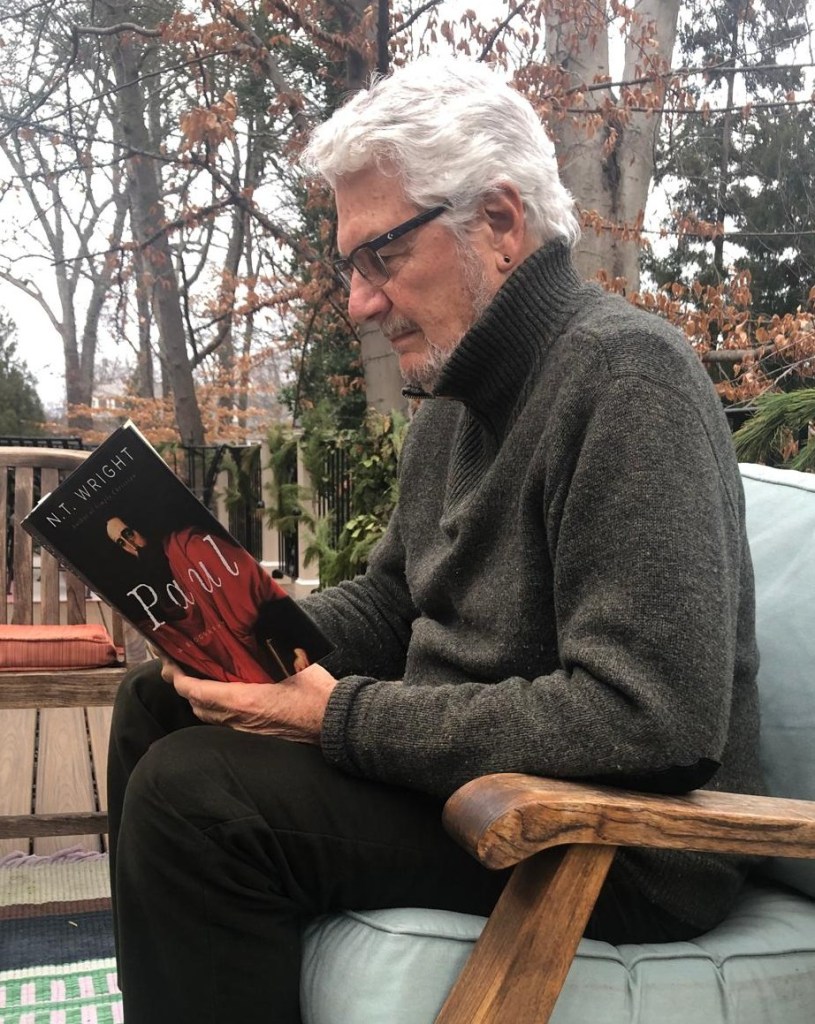
In 2021 he gave the opening address to the World Shakespeare Congress in Singapore, and he continues to lecture and present acting workshops around the globe. He has held fellowships and visiting appointments from Berlin and Salzburg to Singapore and Beijing, including distinguished visiting professorships at the universities of Victoria and McMaster in Canada and Wisconsin and California Santa Barbara in the US.
He has been married to Annie Tyrrell since 1970, and they now live in Dublin and France. They have three daughters: Miranda, an author and journalist in Washington, and the twins Jessica and Megan, who are dancers and co-artistic directors of Junk Ensemble, a dance-theatre troupe in Dublin.

